


Care and Maintenance
The Philosophy of Leather Evolution
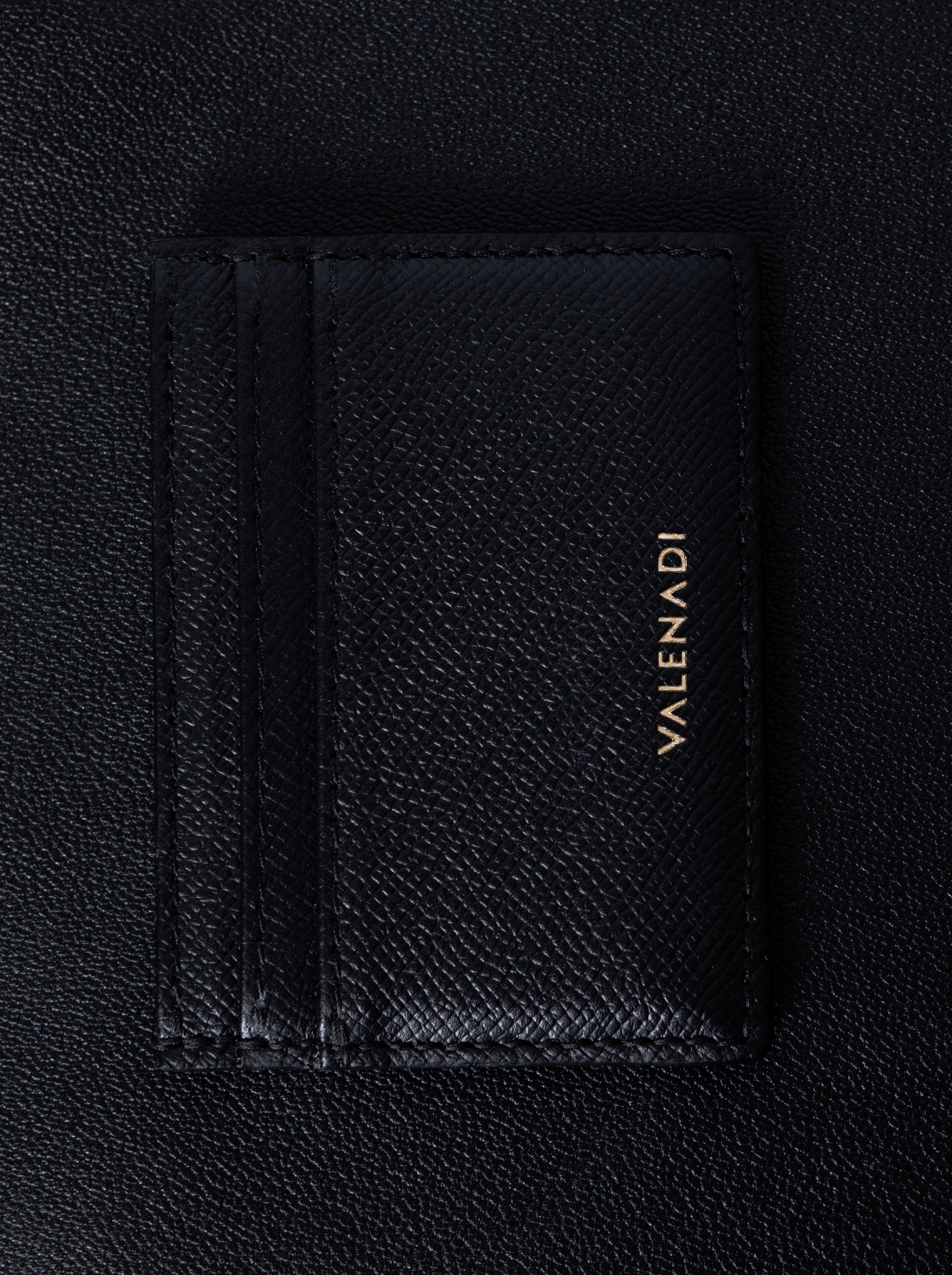
Valenadi creations are meticulously crafted from exceptional, organically tanned European leathers and rare skins, selected for their unique quality and noble character. As a natural, living material, premium aniline hide responds beautifully to regular handling, developing a deep, individual patination and relaxed structural softness over time. Surface natural variations, including subtle grain shifts, localized wrinkles, veins, and fine organic markers, are intrinsic characteristics of authentic, non-processed leather. These hallmarks celebrate the absolute provenance of the material and do not denote manufacturing irregularities or defects.
Structural Preservation and Silhouette Maintenance
To protect the refined geometry and elegant silhouette of your Valenadi object, we recommend that you never overfill the interior cavities or introduce heavy, sharp, or irregularly contoured items. When your piece is not in active use, empty the interior completely, fasten all zippers and buckles, and secure all structural retention straps.
Gently stuff the interior cavities with neutral, acid-free tissue paper or clean bubble wrap to maintain its original proportions and prevent relaxed creasing. We advise against storing your object by hanging it from its top handles or shoulder straps; continuous weight over time stretches hand-stitched points and permanently distorts the drop line.
Environmental Safeguards and Climate Care
Natural leather is highly sensitive to external environmental elements. When resting, your object should be stored upright in a temperate, dry, and dark environment, ideally within its original breathable cotton dust cover and signature boxing. Do not place anti-humidity silica packets, chemical moisture absorbers, or desiccant sachets inside the storage spaces. These extract essential moisture from the surrounding air, creating a severe drying effect that dehydrates the natural leather, degrades the fibers, and causes cracking.
Protect the material from prolonged exposure to intense sunlight, ultraviolet rays, and direct heat sources (such as heating radiators, vehicles, or window displays), which can prematurely bleach the leather's pigmentation, dehydrate the skin, and crack the hand-finished edge sealant.
Textile Interaction and Liquid Management
Delicate nubuck, light-toned, and aniline leathers are highly receptive to cross-color transfer. Avoid continuous friction against raw denim, deep indigo dyes, dark garments, or unwashed textiles that may bleed onto the surface of the leather. Safeguard your object from direct contact with materials that leave indelible markings, such as ink pens, cosmetic pigments, oil-based formulations, fragrances, and alcohol-based solvents.
Should the leather encounter water, rain, or snow, absorb the moisture immediately by blotting gently with a soft, clean, lint-free cloth. This prevents the formation of water rings, swelling, or permanent surface blisters. Never rub, scrub, or apply mechanical friction to wet leather, as this pushes moisture deeper into the natural grain and permanently damages the surface glaze.
Internal Linings and Metallic Integrity
Suede and Split-Calfskin Interiors: For objects finished with premium raw suede, nubuck, or split-calfskin internal linings, avoid all liquid contact entirely. Surface dust, lint, and debris should be treated gently using a dedicated, soft-bristle suede brush designed to lift the natural nap without scarring the hide.
Precious Metallic Hardware: The solid brass, palladium, or precious metal-plated hardware components are custom-engineered to age gracefully alongside your leather piece. Protect all custom metallic closures, feet, and buckles from impact against abrasive surfaces to prevent scratching. To clean, simply wipe with a soft, dry microfiber cloth; do not apply commercial metal polishes or liquid jewelry cleaners, which strip away protective anti-tarnish lacquers and cause immediate discoloration.
Atelier Restoration and Approved Servicing
Avoid mass-market polishes, household cleaners, or conditioning chemicals that can obstruct natural pores and damage edge paints. For servicing or restoration, rely exclusively on approved atelier specialists to maintain warranty coverage.
